
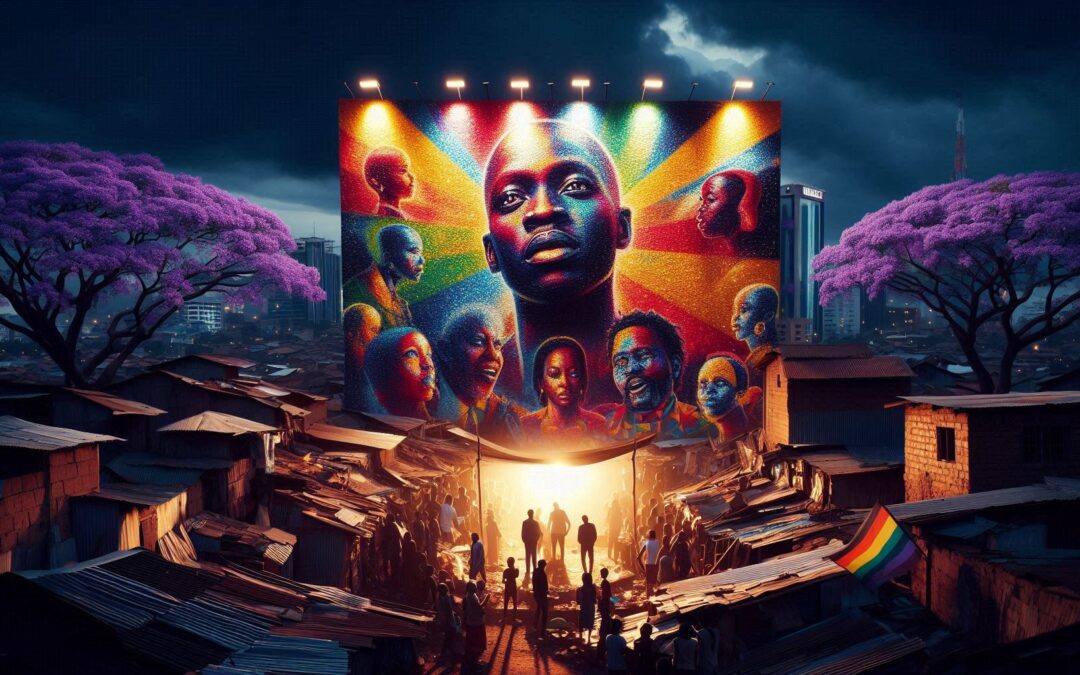
Introduction: A Lifeline Poisoned – The Ugandan Asylum Fraud Crisis Exposed
A whispered plea in Runyankore, crackling with panic from a European city, exposes a profound betrayal. A Ugandan man, facing deportation from Germany, had staked his asylum claim on a single, powerful identity: persecution for being gay. Yet, when confronted with the reality of that identity, his response was a furious, “Over my dead body!” This stark contradiction is not an isolated drama, but a glaring symptom of a corrosive crisis poisoning international refugee protection. While the system was designed as a sacred lifeline for those fleeing genuine persecution, it is being systematically exploited as a fraudulent shortcut for economic migration.
This investigation delves into the complex and damaging world of fabricated asylum claims emanating from Uganda. We uncover the shadow economies, like Kampala’s infamous Nasser Road, where forged police reports and medical records are traded. We analyse the devastating ripple effects: the theft of credibility from authentic LGBTQ+ refugees, the crippling burden placed on legal advocates, and the dangerous reinforcement of the Museveni dictatorship’s homophobic propaganda. Beyond exposing the problem, we explore the urgent need for holistic solutions—from strengthening in-country support and legal migration pathways to ensuring asylum procedures are both rigorously fair and compassionate. This is the story of how a single lie can unravel the threads of safety for the most vulnerable, and what must be done to mend the lifeline before it frays beyond repair.
Twenty Key Points Exploring the Issue
The Desperate Gambit: How Hardship Fuels Deceptive Asylum Claims in Uganda
In the verdant but economically strained landscapes of Uganda, a complex and morally fraught survival strategy has taken root among a desperate minority. Confronted with a stifling lack of opportunity and a political regime more invested in perpetuating its own power than fostering inclusive growth, some citizens see emigration as their only hope. However, with legal pathways to work or study in the West being notoriously narrow, expensive, and competitive, an illicit alternative has emerged in the shadows: the fabrication of an LGBTQ+ identity to claim asylum.
This “desperate gambit” is not born of mere opportunism, but of a profound systemic failure. For the average Ugandan, particularly the youth, the avenues for advancement are relentlessly constricted. The dictatorship of Yoweri Museveni has overseen an economy where cronyism often trumps merit, public services are dilapidated, and unemployment is a spectre haunting a vast, educated generation. The dream of building a secure life—owning a home, supporting a family, pursuing a career—can seem like a cruel mirage on the Ugandan horizon.
Simultaneously, the regime has meticulously cultivated and weaponised homophobia as a tool of political distraction and social control. By painting the LGBTQ+ community as a foreign-funded menace to so-called “African values,” the dictatorship rallies a conservative base and deflects attention from its own governance failures. The tragic irony is that this very atmosphere of intense persecution, which creates genuine refugees fleeing for their lives, is also what makes feigning membership of that community appear as a plausible ticket out for others.
The calculus, however warped, is grimly logical. To a young man in Kampala or a woman in Mbale, seeing no future at home, the asylum systems of Europe or North America can appear as a lottery worth rigging. They hear stories—often exaggerated through the grapevine—of those who “made it” by telling a compelling story of LGBTQ+ persecution. They learn of the infamous forgeries available on the backstreets of downtown Kampala: fake police reports, fabricated medical documents, and concocted affidavits. In a context where “beggars can’t be choosers,” the moral compromise is rationalised as a necessary evil for survival.
Yet, this gambit is catastrophically short-sighted and ethically corrosive. It is a stark example of cutting off one’s nose to spite one’s face. The individual may secure temporary refuge, but in doing so, they inflict a deep wound on two fronts.
Firstly, they grievously harm genuine LGBTQ+ Ugandans. Every exposed fraud validates the dictatorship’s poisonous rhetoric that homosexuality is a “lifestyle choice” adopted for gain. It makes it harder for real victims, who often have scant physical evidence of their orientation or persecution, to be believed. It forces immigration officials to interrogate heartbreaking testimonies with heightened suspicion, turning vital protection interviews into hostile inquisitions.
Secondly, they undermine the integrity of the international protection system itself. Asylum is a sacred, finite resource for the world’s most vulnerable. Its abuse drains the goodwill of host nations, leading to stricter, more rigid policies that inevitably snare the very people the system was designed to save. It transforms a lifeline into a loophole, and in the ensuing political backlash, all asylum seekers from certain regions are tarred with the same brush of presumed deceit.
Ultimately, the “desperate gambit” is a symptom of a deeper sickness within Uganda—a sickness born of economic hopelessness and political oppression under an enduring dictatorship. The solution does not lie in vilifying the desperate, but in addressing the root causes of their desperation: opening genuine economic opportunities and restoring political freedoms. Until that day, this deceptive strategy will continue, a tragic performance where individuals are forced to impersonate the victims of a persecution the state itself has engineered, all in a bid to escape the broader prison the nation has become.
Of False Testaments and Nasser Road: The Shadow Forge Undermining Truth
Within the teeming, mercantile heart of Kampala, a particular thoroughfare has become a byword for a different kind of commerce. Nasser Road, a bustling hub for printing presses and stationery shops, holds an infamous double life. Beyond its legitimate trade in wedding invitations, business cards, and exam papers, it functions as a well-known forge—a shadowy bazaar where the desperate and the deceitful can commission a counterfeit past to secure a future abroad. Here, the very documents intended to verify truth are manufactured as fiction, creating a profound crisis of credibility that reaches from Uganda’s streets to the asylum tribunals of foreign capitals.
This phenomenon is not a matter of mere petty crime; it is a sophisticated, responsive industry born of a specific national malaise. Under the dictatorship of Yoweri Museveni, the integrity of state institutions has been systematically eroded. The police force, for many citizens, is not viewed as a protector of justice but as an instrument of political control and extortion. This deep-seated public cynicism creates a perverse environment where the falsification of an official stamp or a police report is seen not as an assault on the state, but as a pragmatic workaround, a corrupt and hostile system. In a sense, the proof of the pudding is in the eating; when genuine interactions with authority so often involve fabrication and bribery, the moral distinction between a real and a forged document begins to blur for those in dire straits.
The forgeries produced are chilling in their specificity and plausibility. For an individual constructing a false LGBTQ+ asylum claim, Nasser Road’s artisans can provide a harrowing, paper-trail narrative:
Fabricated Police Reports: Meticulously typed on seemingly official letterhead, these documents detail the “arrest” and “detention” of the applicant for “carnal knowledge against the order of nature” or “gross indecency.” They include fictitious OB numbers, the signatures of non-existent officers, and detailed accounts of alleged offences.
Counterfeit Medical Records: These purport to be from clinics or hospitals, documenting injuries sustained from “mob justice” or “police brutality” during the alleged arrest. They list treatments for bruises, fractures, or psychological trauma, complete with forged doctor’s signatures and official stamps.
Falsified Affidavits and Court Documents: Sworn statements from “family members” disowning the applicant, or court summonses for upcoming “trials” under Uganda’s Draconian Anti-Homosexuality Act, add layers of corroborating detail to the story.
The existence of this forge has catastrophic consequences. For immigration officials in the United Kingdom, Germany, or Canada, the discovery of a Nasser Road document instantly invalidates a claim, casting the entire application into the realm of bad faith. It trains them to view all documentation from Uganda with intense scepticism. Tragically, this blanket suspicion then falls upon the genuine refugee—the individual who fled at night with only the clothes on their back, who possesses no official paperwork to prove their persecution precisely because the state that persecuted them would never provide it. The forger’s artifice thus steals the credibility of the truly vulnerable.
Furthermore, this shadow economy directly fuels the propaganda of the Museveni dictatorship. When such forgeries are exposed, regime apologists seize upon them to proclaim that all claims of LGBTQ+ persecution are fraudulent, a foreign conspiracy, and that the state’s oppressive laws are therefore justified. The forgeries on Nasser Road, in a bitter twist, become tools to reinforce the very climate of hatred that creates real refugees.
Ultimately, the story of Nasser Road is a parable of institutional decay. It reveals how corruption and the erosion of public trust under an authoritarian regime can spawn parasitic industries that exploit global systems of compassion. It underscores that the fight for credible asylum is not only fought in immigration courts abroad, but also in the struggle to restore integrity, transparency, and justice within Uganda’s own institutions. Until that integrity is rebuilt, Nasser Road will remain a sinister workshop, trading in fabricated fears and complicating the search for sanctuary for those whose fears are tragically, undeniably real.
Of Crying Wolf and Crumbling Trust: How False Claims Erode the Asylum Lifeline in Uganda
In the intricate and high-stakes theatre of asylum adjudication, credibility is the cornerstone upon which sanctuary is either granted or denied. For the genuine refugee fleeing Uganda, their testimony—their lived truth—is their most vital asset. However, this foundation of trust is being systematically undermined, not by those who seek to destroy the system from without, but by a corrosive tide of manufactured narratives from within. The consequence is a devastating erosion of credibility, where each exposed falsehood acts as a poison in the well, contaminating the vital resource of trust for every applicant who follows.
This erosion operates on a grimly logical principle familiar from the adage: fool me once, shame on you; fool me twice, shame on me. Immigration officials in host nations are not naive arbiters; they are trained to assess risk, detect inconsistency, and protect the integrity of their country’s borders and humanitarian programmes. When a fabricated claim from a Ugandan applicant is uncovered—replete with purchased forgeries from Nasser Road or a rehearsed, factually hollow tale of persecution—it registers not as an isolated incident, but as a data point. It confirms a latent suspicion of systemic abuse. The official’s posture hardens from one of open-minded assessment to one of entrenched cynicism and intensified scrutiny.
For subsequent applicants from Uganda, this heightened rigour translates into tangible, often insurmountable, obstacles:
The Presumption of Doubt: The burden of proof shifts. Instead of their account being given the benefit of the doubt, the starting point becomes one of scepticism. The applicant is no longer a potential victim requiring protection, but a potential fraudster requiring verification. Every detail of their story is cross-examined with forensic precision, searching for the slightest crack that might indicate another fabrication.
Prolonged and Invasive Procedures: Applications are subjected to longer processing times as officials demand ever more corroborating evidence—evidence that a person fleeing state-sponsored or societal violence under a dictatorship like Museveni’s would rarely be able to procure safely. Interviews become more confrontational, designed to trip up the applicant rather than to understand their experience. The trauma of recounting persecution is thus compounded by the ordeal of being disbelieved.
The Catch-22 of “Proof”: Genuine refugees from Uganda’s oppressive climate often have the least tangible evidence. A gay man fleeing a mob or state harassment does not obtain a stamped certificate from the police confirming his persecution. A political activist escaping clandestine detention does not carry hospital records. Their evidence is their testimony, their scars, and their deep, contextual knowledge. Yet, faced with a history of fraudulent “official” documents, officials may now demand precisely the kind of paperwork that only a forger can provide, creating an impossible paradox for the truthful claimant.
The ultimate tragedy is that this erosion is weaponised by the very regime that creates the refugees. The Museveni dictatorship routinely dismisses international criticism of its human rights record by insinuating that those who flee are economic migrants spinning tales. Each time a false asylum claim is exposed abroad, the regime’s propagandists seize upon it, broadcasting it as “proof” that all dissidents or LGBTQ+ individuals seeking refuge are liars. Thus, the deceit of a few directly bolsters the oppressive narrative of the state, further endangering the vulnerable community left behind.
In essence, the fabricator of a false claim commits a dual betrayal. They betray the host country’s trust, and far more grievously, they betray their compatriots whose lives depend on that trust. They steal not just a place in a queue, but the very presumption of honesty that is the first, fragile gift offered to someone presenting themselves as a victim. The system, in protecting itself, must then build higher walls and more complex filters, and those most in need of sanctuary find themselves locked out by a gate forged from the lies of others. The path to safety becomes narrower, darker, and infinitely more difficult to navigate, all because the currency of truth has been devalued by counterfeit pleas.
A Poisoned Chalice: How Fabricated Asylum Claims Intensify Persecution for Uganda’s LGBTQ+ Community
Within the fraught and dangerous landscape for LGBTQ+ Ugandans, the act of seeking asylum is a profound testament to survival—a final, desperate recourse for those whose safety and very existence are threatened by state-sponsored bigotry and societal violence. Yet, tragically, this vital lifeline is being sabotaged from an unexpected quarter. The proliferation of fabricated asylum claims by individuals feigning LGBTQ+ identities for economic migration does not merely abuse a system; it actively and directly fuels the fires of persecution at home. These falsehoods become a potent weapon in the hands of a hostile state, turning the quest for sanctuary abroad into a mechanism for endangering those left behind.
This dynamic operates as a cruel, self-fulfilling prophecy. The narrative aggressively propagated by the regime of dictator Yoweri Museveni and its allied anti-rights groups is that homosexuality is an alien, “un-African” behaviour, a corrupting import from the West. Within this toxic rhetoric, authentic LGBTQ+ identity is dismissed as non-existent; any manifestation of it is characterised as a learned performance, adopted either for moral decadence or, more pointedly, for material gain. The phenomenon of false asylum seekers—cisgender, heterosexual individuals who cynically “perform” a gay or lesbian identity to secure residency in Europe or North America—is seized upon as the ultimate “proof” of this theory.
The process of harm is methodical and devastating:
Weaponisation by the State: Each exposed case of asylum fraud abroad is gleefully reported by state-aligned media and officials within Uganda. It is presented not as an isolated instance of immigration crime, but as definitive evidence that all claims of LGBTQ+ persecution are fraudulent. Government spokespersons and members of parliament cite these cases to argue that individuals are “pretending” to be gay solely to access Western funds and visas, thereby justifying ever-more Draconian legislation and police action against the community. The false claimant, in essence, hands the dictatorship its most credible-looking propaganda tool.
Empowerment of Vigilante and Anti-Rights Groups: Homophobic evangelical movements and vigilante networks use these stories to validate their campaigns of hatred. They argue that the community is not deserving of empathy or protection, but is instead composed of cunning fraudsters undermining Uganda’s sovereignty and morals. This rhetoric directly incites further discrimination, violence, and so-called “moral policing,” as individuals feel emboldened to attack those they have been told are treacherous actors in a foreign conspiracy.
Erosion of Sympathy and Solidarity: Within the broader Ugandan public, these narratives sow confusion and erode potential sympathy. For ordinary citizens grappling with economic hardship under Museveni’s rule, the idea that people are “getting rich” by pretending to be gay overseas reinforces resentment and validates prejudice. It closes avenues of potential understanding and allyship, further isolating an already besieged community.
The consequence for a genuine LGBTQ+ Ugandan is a terrifying double bind. Their authentic identity and lived trauma are rendered suspect. If they speak out about their experiences, they are accused of “practising for an asylum claim.” If they seek help, they risk being labelled a foreign agent. The space for truth evaporates in a fog of manufactured doubt. As the old adage goes, a lie can travel halfway around the world while the truth is still putting on its boots. The damaging falsehood of widespread asylum fraud circulates globally with ease, while the nuanced, painful truth of genuine persecution struggles to be heard above the din.
Ultimately, this constitutes a profound betrayal. The economic migrant who fabricates an LGBTQ+ persona to escape poverty is not merely telling a lie on a form; they are, however indirectly, tightening the noose around the necks of those who live that reality every day. They provide the regime with the perfect scapegoat, allowing it to deflect criticism of its human rights record by painting all dissent and difference as a mercenary performance. The fight for asylum credibility thus becomes inextricably linked to the fight for survival within Uganda itself. Securing the former requires protecting the integrity of the process, for when the asylum system is debased by fraud, it is not the system that suffers most—it is the very people it was designed to protect, who find the walls closing in just a little tighter, and the world’s belief in their truth just a little harder to earn.
A Stolen Narrative: The Bitter Betrayal Felt by Uganda’s Authentic LGBTQ+ Community
Within the fraught ecosystem of the Ugandan diaspora, a profound and painful schism has emerged—one born not of ideology, but of a visceral betrayal of lived experience. For authentic LGBTQ+ Ugandans who have fled the suffocating persecution orchestrated and tacitly endorsed by the regime of dictator Yoweri Museveni, the journey to safety is a testament to unimaginable courage. It is a path paved with trauma, loss, and the constant fear of exposure. To then witness that very trauma being co-opted, commodified, and performed as a cynical stratagem by opportunistic compatriots is not merely an insult; it is a theft of identity and a deep fracture within what should be a community of shared refuge.
This betrayal operates on multiple corrosive levels, eroding the fragile bonds of trust that sustain exiles far from home.
1. The Commodification of Trauma
The genuine LGBTQ+ refugee’s story is one of profound personal cost—family rejection, mob violence, state harassment, and the psychological scars of living in perpetual fear. It is a narrative of survival, not strategy. When economic migrants fabricate similar stories, complete with purchased forgeries, they reduce this deep trauma to a transactional plot device. They treat a community’s collective pain as a convenient costume to be worn for a visa interview and discarded upon receipt of a residency permit. This transforms a sacred testimony of survival into a cheap, mass-produced commodity, devaluing its currency and mocking the authenticity of those for whom the pain is a permanent, shaping reality.2. The Fracturing of Diaspora Solidarity
The Ugandan diaspora abroad often functions as a vital support network—a place for cultural connection and mutual aid. However, the knowledge that some within this community have built their legal standing on a fabricated identity creates an atmosphere of suspicion and anger. Authentic LGBTQ+ individuals, particularly activists, feel a righteous fury. Their hard-won advocacy, their efforts to educate host nations about the realities of life under the Anti-Homosexuality Act, are undermined. They face the galling prospect that the person sitting beside them at a community gathering, who may even publicly express homophobic views to blend in with other exile circles, secretly used the identity they scorn to secure their own freedom. This breeds isolation and forces genuine refugees to vet even their fellow countrymen, leaving them to feel that with friends like these, who needs enemies?3. The Weaponisation of Distrust Against Authentic Claims
The anger of authentic activists is not merely emotional; it is strategic. They understand all too well that the prevalence of fraud directly imperils those still seeking asylum. Their lived experience becomes suspect by association. When they speak out to support a genuine case, their advocacy is potentially tainted according to authorities now primed to see a coordinated deception. This places them in an impossible position: to remain silent is to abandon their community, but to speak is to risk being dismissed as part of a fraud ring. The opportunists, therefore, steal not just stories, but also the credibility and voice of those who fight for justice.4. Reinforcing the Dictator’s Narrative
Most insidiously, this internal betrayal plays directly into the hands of the Museveni dictatorship. The regime’s propaganda tirelessly promotes the lie that homosexuality is a chosen “lifestyle” for the gullible or the mercenary. The exposed cases of false asylum claims are paraded as vindication of this stance. When diaspora activists express their fury at these frauds, the regime exploits that very anger to showcase “division” and “confession,” further muddying the waters and attempting to discredit the entire premise of LGBTQ+ persecution.In essence, the betrayal is total. It robs individuals of the uniqueness of their suffering, poisons the well of community support, jeopardises future sanctuary for others, and furnishes the oppressor with fresh ammunition. The fabricator seeks only a document, but the cost of that document is paid from the depleted reserves of trust, solidarity, and credibility that are the lifeblood of a persecuted community in exile. The fracture it creates is not easily mended, for it is a reminder that even in flight, the vulnerable can be exploited by those from whom they most expected understanding.
A Game of Chess Against the Machine: Why Forged Documents Are a Fatal Miscalculation
For the desperate individual in Uganda contemplating the fabrication of an asylum claim, the acquisition of convincing forgeries from the shadow economies of downtown Kampala may feel like the masterstroke that will unlock a new life. There is a perilous assumption that a well-stamped document, its paper aged to a convincing yellow, will pass muster in a foreign bureaucracy thousands of miles away. This assumption represents a profound and often catastrophic misreading of the sophisticated verification architecture now employed by nations like Germany, an architecture that treats such forgeries not as clever tricks, but as glaring admissions of guilt that irrevocably seal an applicant’s fate.
This process is not the paper-shuffling of a bygone era but a forensic, multi-layered investigation. To believe otherwise is to fall prey to the dangerous adage that you can fool all the people some of the time, but you cannot fool all the people all the time. Immigration authorities, particularly in nations with extensive experience in global asylum claims, are precisely calibrated to detect the anomalies that Ugandan forgers, however skilled, cannot perfectly replicate.
The Sophisticated Verification Process:
Forensic Document Analysis: Specialised units employ advanced techniques far beyond the naked eye. They examine the chemical composition of ink and paper, the micro-printing on official seals, the specific typography and layout mandated by Ugandan government departments, and the sequential authenticity of reference numbers. A stamp from a Kampala police station that uses the wrong shade of blue, or a hospital letterhead with a pixelated logo, is instantly flagged.
Digital Cross-Referencing and Database Checks: Germany and similar nations maintain extensive databases and liaise with international bodies. They can verify the existence of a named police officer, check the legitimacy of a cited court case number, or confirm whether a purported clinic even exists. A critical tool is communication with trusted, on-the-ground sources—which may include international NGOs, UN agencies, or other verified entities—who can perform discreet, physical verification of claims.
Contextual and Narrative Scrutiny: Officials are deeply trained in the specific country conditions of states like Uganda. They know the modus operandi of the Museveni dictatorship’s security apparatus, the typical procedures of the police, and the realities of the legal system. A forged document alleging a specific type of arrest or a particular pattern of detention that does not align with known, verified practices will be immediately suspect. The story woven around the document is subjected to immense, logical pressure.
The Catastrophic Consequences of Exposure:
The moment a document is proven false, the applicant’s case does not merely suffer a setback; it undergoes a fundamental, irreversible transformation.
Immediate and Final Rejection: The claim is not just denied; it is deemed to have been made in bad faith. The foundation of the application is recognised as fraud, leaving nothing credible upon which to grant protection.
Total Loss of Credibility: The applicant is permanently marked within the system as a fabricator. Every subsequent statement they make, even about verifiable biographical facts, is viewed through the lens of proven deceit. This stigma is often digitally recorded and shared within international immigration networks.
Long-Term or Permanent Entry Bans: A rejection on grounds of fraud typically carries a severe ancillary penalty: a re-entry ban to the entire Schengen Area, often lasting for many years, if not a decade or more. This legally forecloses not only asylum but all future avenues—work, study, or family reunion—within one of the world’s most desirable blocs.
Fuel for the Dictator’s Propaganda: As previously established, the exposure of such fraud is a gift to the Museveni regime. It provides a concrete, “verified” example to support its narrative that all claims of persecution are elaborate hoaxes, thereby further endangering the genuine LGBTQ+ community.
Ultimately, the gambit of submitting a forged document is a high-stakes game played against a vastly more powerful opponent with superior intelligence. The forger in Kampala is crafting a prop for a local drama; the German verification system is a global intelligence operation dedicated to uncovering truth. The former works from a template; the latter draws from a live, updating stream of data, expert analysis, and international cooperation. For the genuine refugee, this rigour is a necessary shield against those who would debase the system. For the fabricator, it is an inescapable trap, proving that a strategy built on a lie is ultimately a house built on sand, destined to collapse under the slightest scrutiny and bury the builder in the ruins of their own deception.
A Pact with the Devil: The Moral and Legal Abyss of Asylum Fraud
To a Ugandan gazing upon a seemingly hopeless future within the confines of a nation defined by the enduring dictatorship of Yoweri Museveni—where opportunity is a scarce commodity doled out through patronage, and genuine political or social dissent is met with quiet disappearance or noisy intimidation—the temptation to bend the rules to escape can be overwhelming. Yet, in choosing to construct a false identity and a fabricated narrative of persecution to gain asylum, the individual does not merely bend the rules; they step into a profound legal and moral quagmire. This decision, often rationalised as a victimless shortcut, is in reality a Faustian pact, trading immediate desperation for a future of permanent exile, legal jeopardy, and an unconscionable moral betrayal.
The Legal Abyss: A Permanent Door Slammed Shut
Asylum is not a discretionary privilege, but a legal right afforded under strict international and national laws. Its cornerstone is good faith. Consequently, lying on an application is not a minor administrative infraction; it is immigration fraud, a criminal offence of the highest order in the eyes of host nations like the United Kingdom, Germany, or Canada.
The legal repercussions are severe, definitive, and deliberately punitive to act as a deterrent:
Deportation with Prejudice: The outcome is not merely a rejection letter. It is a forcible removal. The applicant is placed on a flight back to Entebbe, their dream of sanctuary transformed into a state-enforced return, often under escort. This return is itself laden with new risks, as the reason for deportation may become known.
The Long Shadow of the Entry Ban: The most devastating consequence is the legal excommunication that follows. A deportation for fraud typically carries an automatic, long-term ban on re-entering the host country and, crucially, the entire geopolitical bloc it belongs to, such as the Schengen Area. This ban, often lasting five, ten, or even more years, is digitally enshrined in international immigration databases. It is not a temporary setback; it is a permanent foreclosure. It bars not only future asylum claims but all legal pathways—work visas, student visas, skilled migrant schemes, and family reunification. That door is not just closed; it is bricked up. The individual has, through their own actions, declared themselves persona non grata.
A Stain on Future Applications Worldwide: The record of fraud is a black mark that other nations’ immigration authorities can see. Applying for a visa to another country becomes exponentially harder, as the initial question will always be about previous immigration violations.
The Moral Quagmire: A Threefold Betrayal
Beyond the cold letter of the law lies a deeper, more corrosive moral bankruptcy. The act of fabrication is a triple betrayal.
Betrayal of the Host Nation’s Compassion: The asylum system is an act of collective humanitarian conscience, funded by taxpayers and administered by officials who must balance compassion with responsibility. To exploit this system with lies is to spit in the face of that goodwill, to steal resources meant for the most vulnerable, and to justify the arguments of those within the host country who seek to dismantle such protections entirely. It is the very definition of biting the hand that feeds you.
Betrayal of Genuine Refugees: As detailed previously, each fraud poisons the well for those with true, terrifying claims. It forces genuine LGBTQ+ individuals or political dissidents to run a gauntlet of suspicion designed to catch liars. The fabricator steals not just a place, but the presumption of truth, upon which another’s life may depend.
Betrayal of the Self and One’s Own Narrative: In a final, tragic irony, the individual who fabricates a story of LGBTQ+ persecution must then live with the knowledge that they have permanently associated their name and identity with a lie. They have commodified a community’s deepest suffering for personal gain, an act that severs an honest connection to their own homeland and history. They become a walking testament to the very cynicism the Museveni regime promotes—that every story is for sale and no principle is sacred.
Thus, the “legal and moral quagmire” is a trap of one’s own making. The fabricator, seeking to escape one prison, successfully engineers another—a permanent state of legal limbo and moral exile. They exchange the tangible oppression of Museveni’s Uganda for an intangible but equally binding sentence: a lifetime of being legally unwelcome in the free world they sought to deceive, and forever complicit in the increased suffering of those they pretended to be. The short-term gamble becomes a lifelong sentence of restricted horizons and a burdened conscience, a stark lesson that the foundation of any new life, especially one sought in sanctuary, must be built upon the unshakeable ground of truth.
The Road Not Taken: How the Allure of Deception Blinds Ugandans to Legal Migration Pathways
For the Ugandan citizen surveying a domestic landscape of constrained opportunity under the protracted rule of Dictator Yoweri Museveni, the impetus to seek a future abroad is a powerful and understandable one. Yet, in the fog of this desperation, a critical misappraisal often occurs. The complex, arduous, but legitimate avenues for legal migration are frequently dismissed as impossible fantasies, while the deceptive shortcut of a fabricated asylum claim is tragically misperceived as the only viable route. This is a profound error of judgment, one that sees individuals rush headlong into a fraudulent dead-end while leaving the gate to sanctioned pathways swinging shut, untried and unexplored.
This phenomenon is not merely a case of poor research; it is a systemic failure of perception, often exacerbated by a culture of misinformation and the seductive simplicity of the lie. The reality is that for those with the requisite qualifications, perseverance, and integrity, several legal corridors exist, each demanding a different investment but offering a stable foundation.
The Overlooked Avenues:
Skilled Worker and Professional Visas: Nations like the United Kingdom, Canada, and Australia operate points-based immigration systems that actively seek individuals with specific tertiary qualifications, professional certifications, and skilled work experience. For Ugandan engineers, IT professionals, healthcare workers, or accountants, these are direct routes. The process is transparent, though competitive, requiring English language proficiency, credential verification, and often a job offer. It is a meritocratic pathway, but one entirely foreclosed the moment an asylum claim, founded on lies, is lodged.
Study Permits: For younger Ugandans, international education remains one of the most powerful engines of legitimate global mobility. Securing admission to a foreign university and proving the financial means to support oneself opens the door to a student visa. This pathway provides a world-class education and often includes provisions for limited work during studies and, crucially, post-study work visas that can serve as a bridge to long-term residency. It is an investment in one’s own human capital, rather than a gamble on a stolen identity.
Official Work Schemes and Seasonal Worker Programmes: Certain countries have bilateral agreements for specific sectors. Agricultural work schemes, care worker visas, and other targeted programmes offer temporary but legal employment abroad. While not always leading to permanent settlement, they provide legitimate income, international experience, and a compliant immigration record that builds, rather than destroys, future credibility.
Business and Investor Visas: For those with access to capital, some nations offer visas for entrepreneurs willing to establish or invest in businesses on their soil. This route demands significant financial resources and a solid business plan, but it is a lawful mechanism for relocation based on economic contribution.
Why These Paths Are Ignored:
The neglect of these options in favour of asylum fraud stems from several intertwined factors:
The Mirage of Speed and Certainty: The asylum process, however flawed the claim, can appear deceptively straightforward: tell a story, submit documents (forged or otherwise), and await an interview. Legal migration, by contrast, is a protracted marathon of examinations, applications, verifications, and significant fees. In the calculus of desperation, the shortcut seems more accessible.
A Deficit of Accurate Information and Mentorship: Navigating complex immigration rules requires reliable guidance. In a context where many migration “consultants” are themselves unregulated and profit from peddling the asylum fraud scheme, honest advice on legal work or study visas is scarce. There is a lamentable absence of a guiding hand showing the legitimate way forward.
Perceived Insurmountable Barriers: The requirements—English test fees, university tuition, proof of substantial savings—can seem astronomically high to the average Ugandan. The asylum claim, requiring only the cost of a forgery and a plane ticket, is mistakenly considered the “poor man’s route.” This fails to account for the catastrophic, lifelong cost of getting caught.
A Culture of Cynicism Towards Due Process: After decades of a dictatorship where official rules are routinely circumvented through corruption or connections, there can be a deep-seated, subconscious belief that all systems must be gamed to succeed. The transparent, rules-based nature of legal migration is met with suspicion, while the opaque, deceptive asylum gamble feels strangely familiar.
In the end, the tragedy is one of missed opportunity and misguided effort. The immense energy, resourcefulness, and daring required to orchestrate a complex asylum fraud—securing forgeries, memorising a false biography, maintaining a lie under pressure—are precisely the qualities that, if channelled into learning a trade, excelling academically, or developing a professional skill, could unlock a legal door. By choosing deception, the individual commits a crime and makes a damning declaration about their own potential, believing the lie to be easier than the legitimate pursuit of excellence. They sacrifice a future built on their genuine abilities for a present built on a fiction, ensuring that the very skills that could have been their ticket remain forever undeveloped, and the legal pathways remain, for them, eternally the road not taken.
The Thief of Time: How Fraudulent Claims Drown Out the Cries of the Truly Persecuted
Within the strained and often under-resourced ecosystem of refugee advocacy, the most precious commodities are not money or paper, but time and credibility. For the dedicated lawyers, caseworkers, and activists—both Ugandan and international—who labour to defend the rights of those fleeing genuine persecution, these resources are finite and fiercely guarded. The insidious influx of asylum applications built upon fraudulent LGBTQ+ narratives represents a profound and corrosive theft. It forces these advocates into a draining and demoralising triage, where their expertise is commandeered not to save lives, but to untangle webs of deceit, inevitably diverting critical focus from those whose desperate need is authentic and urgent.
This burden manifests in several concrete and damaging ways, creating a crisis of efficiency and ethics for the very systems designed to offer sanctuary.
1. The Exhausting Liturgy of Disbelief
An advocate’s primary role is to believe, to listen, and to build a case upon a foundation of trusted testimony. When faced with a client whose story is fabricated, this essential dynamic is poisoned from the outset. Hours that should be spent sensitively drawing out traumatic details are instead consumed by a forensic cross-examination of the applicant’s own account, searching for inconsistencies that the advocate knows are likely there. This transforms the lawyer from a champion into a sceptical investigator, a psychologically taxing shift that erodes the professional’s capacity for the empathetic engagement crucial for genuine survivors. It is a dispiriting process of being made to look a gift horse in the mouth—except the gift is a lie, and the time spent inspecting it is stolen from someone else.2. The Diversion of Scarcity
Legal aid for asylum seekers is notoriously limited. Pro bono hours, charitable grants, and the sheer physical stamina of advocates are stretched thin. Every hour spent meticulously dissecting a purchased Nasser Road police report, or challenging a client on the fabricated specifics of a non-existent arrest, is an hour utterly lost. It is an hour not spent preparing the compelling country-expertise report for a genuine political dissident hunted by the Museveni dictatorship’s security apparatus. It is an hour not spent counselling a traumatised lesbian woman on how to recount her sexual assault without retraumatisation. The fraudulent claim actively starves the legitimate one of the professional care it requires to succeed.3. The Erosion of Professional Credibility
An advocate’s reputation with immigration tribunals is a hard-won asset. Judges and caseworkers come to trust certain lawyers and organisations for their rigour and integrity. When an advocate, unwittingly, presents a case later exposed as fraudulent, that credibility suffers a direct blow. The tribunal may begin to view all cases from that advocate’s organisation with heightened suspicion, imposing a “guilt by association” on their entire client list. This forces the advocate into a defensive, bureaucratic posture, requiring them to pre-emptively over-verify every detail of every claim, further slowing the process for all.4. The Moral Injury and Compassion Fatigue
For many advocates, the work is a vocation driven by a profound sense of justice. To discover they have been expertly manipulated, that their skills have been weaponised to perpetrate a fraud against the very humanitarian system they uphold, inflicts a deep moral injury. It breeds cynicism, compassion fatigue, and a corrosive distrust that can bleed into their interactions with future, genuine clients. The emotional capital expended on a liar is capital depleted for a true victim, leaving the advocate less resilient, less trusting, and less able to offer the unwavering belief that a traumatised person needs to heal and to testify effectively.Ultimately, the burden on advocates is a critical part of the fraud’s collateral damage. The fabricator, in seeking to exploit a system, also exploits the goodwill and professional dedication of those who are its guardians. They turn protectors into detectives, divert the lifeblood of legal attention away from the dying, and risk poisoning the well of trust between the bar and the bench. In doing so, they do not merely file a false application; they actively sabotage the machinery of mercy, ensuring that the cries of the authentically persecuted are drowned out by the static of their own, and others’, deception. The cost is measured in delayed justice, denied sanctuary, and the broken spirits of those who stepped forward to help, only to find their hands tied by lies.
The Whisper Network of Deceit: How Rumour Perpetuates a High-Risk Gamble
In the bustling community hubs, WhatsApp groups, and social gatherings of the Ugandan diaspora abroad, a potent and dangerous folklore circulates. It is not a tale of ancestral heroes but a modern mythos of migration, whispered in hushed tones or shared with a knowing glance: the story of the one who “made it.” This narrative, stripped of inconvenient truths and legal complexities, tells of a clever individual who, through a well-crafted story and a few forged papers, successfully secured asylum and now enjoys the comforts of a Western life. This gossip, passed like a contagious meme through the community, does not merely share news; it actively forges a dangerously distorted perception, convincing many that the fabrication of an LGBTQ+ asylum claim is a low-risk, high-reward strategy. This culture of misinformation is a key accelerant in the cycle of fraud, blinding individuals to the stark realities of consequence.
The Anatomy of a Damaging Rumour:
The stories that gain traction are never about the failures. They are carefully curated legends of success, and their power lies in their simplification:
The Omission of Detail: The narrative skips over the months of paralysing anxiety, the gruelling, adversarial interviews, the constant fear of exposure, and the profound moral compromise. It presents the outcome—the residency permit—as the simple, direct result of a single, clever act of deception.
The Glorification of Cunning: Within a context where many feel powerless against the systemic barriers erected by both the Museveni dictatorship and strict immigration laws, the fraudster is sometimes reframed not as a liar, but as a “hustler” or a “survivor” who outsmarted a complex system. This warped admiration lends the strategy a perverse legitimacy.
The False Calculus of Risk: The gossip network systematically downplays the risk. The devastating outcomes—deportation, multi-year entry bans, permanent criminal records—are either unknown to the gossips or deliberately omitted as narrative killjoys. The focus is solely on the anecdotal “win,” creating a survivorship bias of the most damaging kind.
The Consequences of this Misinformed Culture:
This ecosystem of hearsay has dire real-world effects:
Normalisation of Fraud: When a behaviour is constantly discussed as a viable, even admired, option, it becomes normalised. It shifts from being an unthinkable moral breach to a “trick of the trade” for getting to Europe or North America. This erodes the ethical guardrails within the community itself.
Undermining of Legal Advice: A prospective applicant steeped in this gossip may dismiss the cautious, risk-averse counsel of a legitimate immigration solicitor. The lawyer’s warnings about verification and consequences are brushed aside as unnecessary scare-mongering, because “so-and-so from my village did it and now he drives a taxi in Berlin.” It represents a triumph of anecdote over expertise.
A Self-Perpetuating Cycle: Each new person who attempts the fraud based on these stories—regardless of their eventual success or failure—becomes a fresh data point for the rumour mill. If they fail, they are rarely vocal; shame ensures their silence. If they succeed, their story is added to the canon, further “proving” the strategy’s efficacy. The culture thus feeds on itself, drawing ever more flies with honey, while the bitter vinegar of failure remains untasted and unreported.
Reinforcement of the Regime’s Narrative: Crucially, this very culture of rumour plays directly into the hands of the Museveni dictatorship. When host country authorities observe a pattern of similar, fabricated claims from Ugandan nationals, it validates the regime’s propaganda that its citizens are habitual liars and economic migrants, not genuine refugees. The diaspora’s own gossip becomes evidence used to discredit all asylum seekers.
Ultimately, this culture of gossip represents a catastrophic failure of community stewardship. It replaces sober, fact-based guidance with seductive, dangerous fairy tales. It convinces individuals to risk their entire future legal standing on the strength of a whispered story, ignoring the professional, legal, and moral cliffs that lie beneath the fog of rumour. The strategy is, in truth, the very opposite of low-risk; it is a high-stakes gamble with permanent losses, dressed up in the reassuring clothes of community lore. In believing the gossip, the individual does not follow a path to security, but becomes another actor in a tragedy that undermines their community’s credibility and endangers the lives of the truly persecuted back home.
The Unprovable Truth: How Fraud Complicates the Journey for Uganda’s Authentic LGBTQ+ Refugees
For the genuine LGBTQ+ Ugandan fleeing a climate of profound danger, the act of seeking asylum is a leap of faith into a system that demands evidence of a life they were forced to live in the shadows. Their persecution is often intimate, societal, and deliberately unrecorded by the state that tacitly or actively encourages it. They arrive at their host nation’s border or embassy not with a portfolio of official documents, but with the raw, intangible materials of their trauma: memory, fear, and a personal truth that is both their identity and their indictment. They rely, fundamentally, on the credibility of their testimony. Yet, this already fraught reliance on spoken word is catastrophically undermined by the very existence of fraudulent claims, which drown the quiet voice of truth in a cacophony of manufactured “proof.”
The Evidentiary Void of the Genuine Refugee:
Under the dictatorship of Yoweri Museveni, persecution of the LGBTQ+ community is woven into the fabric of the state. It is enacted through mob violence incited by political rhetoric, through blackmail and extortion by local authorities, through ostracism and threats from family and community. This persecution leaves scars, but rarely paper trails.
No Official Record of Identity: Sexual orientation or gender identity is not recorded on a Ugandan passport or national ID. One cannot “prove” they are gay with a certificate.
No Police Reports for Protection: To approach the police to report a homophobic assault is often to invite further persecution, arrest under the Anti-Homosexuality Act, or extortion. The genuine victim’s strategy is invisibility and flight, not documentation.
The Nature of the Threat: The threat often comes from informal networks—family, neighbours, local vigilantes—or from state security acting with plausible deniability. There is no formal summons, no court order; just the terrifying, credible threat of violence.
Their evidence, therefore, is their narrative: a consistent, detailed, and deeply personal account that aligns with the known country conditions of Uganda. Its power lies in its authenticity, its emotional resonance, and its specific, un-rehearsed detail.
The Fraudulent Counterfeit and its Toxic Residue:
Enter the fabricator. To bolster their false claim, they frequently purchase the very thing the genuine refugee lacks: tangible, forged “proof.” A Nasser Road police report detailing a fictional arrest. A concocted medical record from a non-existent clinic. These documents are designed to lend a veneer of bureaucratic legitimacy to a lie.
This act of forgery does not exist in a vacuum; it pollutes the entire evaluative process:
Shifting the Burden of Proof: When officials are presented with, and later discover, such sophisticated forgeries, their operational mindset changes. They begin to expect documentation. The system starts to penalise the absence of paper, viewing it not as a marker of a genuine refugee fleeing a repressive state, but as a potential gap in a fraudster’s otherwise “well-documented” story. The authentic applicant, with only their words, is now at a severe disadvantage.
Creating a ‘Cry Wolf’ Dynamic: As forgeries become common, every piece of submitted documentation is treated as suspect until proven genuine. The time and resources of the immigration authorities are funneled into forensic verification. This breeds a deep-seated institutional cynicism where the starting point is disbelief. The genuine refugee’s testimony is now heard through a filter of suspicion, their trauma scrutinised for the flaws of a professional liar’s performance.
Devaluing Personal Testimony: The most profound damage is the devaluation of the human story. When officials spend their days unravelling elaborate fictions, the power of a simple, unadorned, credible account is diminished. It can be dismissed as “not sufficiently substantiated.” The fraudulent claim, in its failure, steals the currency of truth from those who possess it. It forces genuine survivors to prove a negative—to prove they are not lying—an impossible task that inverts the fundamental principle of protection.
Thus, the complexity of ‘proof’ becomes a cruel trap. The fabricator, by introducing counterfeit evidence, inadvertently raises the evidential bar for everyone. They teach the system to mistrust, and in doing so, they ensure that the most vulnerable—those who fled with nothing but the truth of their own experience—face the highest wall of scepticism. The genuine refugee’s greatest strength, their lived reality, is rendered suspect by the lies of others, leaving them in a Kafkaesque battle where the very absence of forged documents becomes a mark against them, and their most powerful evidence is the one thing a fraudster can never truly replicate: the unassailable, painful, and profound credibility of a truth lived, not bought.
A Hierarchy of Harm: How Fabricated Claims Fracture the Foundations of Asylum
Within the international framework of refugee protection, distinct categories of persecution exist, each representing a legitimate and terrifying reality for those who flee. For Ugandans, the two most prominent grounds are political persecution, often arising from opposition to the entrenched dictatorship of Yoweri Museveni, and identity-based persecution, such as that faced by the LGBTQ+ community under the regime’s weaponised homophobia. While international law and ethical practice hold both as equally valid grounds for sanctuary, a perverse and damaging tension has emerged between them. This tension is not inherent to the categories themselves, but is artificially manufactured by the act of fraud. When individuals fabricate an identity-based claim for economic reasons, they do not merely deceive a foreign government; they actively corrode the integrity of that specific category of asylum, inadvertently creating a false hierarchy of credibility that harms all who seek refuge.
The Distinct Terrains of Persecution
The nature of the threat differs significantly, influencing the evidence a claimant can present:
Political Persecution: This often involves a traceable record. There may be evidence of party membership, written critiques of the regime, records of arrest, court documents (however politically manipulated), or a history of public activism. The persecution is frequently enacted by the state’s formal apparatus—the police, the military, the courts—which, ironically, can generate a paper trail. The claimant’s narrative can often be cross-referenced with verifiable events, dates, and public knowledge of the regime’s tactics.
Identity-Based (LGBTQ+) Persecution: As previously explored, this persecution thrives in shadows and societal complicity. It is intimate, often familial, or communal, and deliberately unrecorded by a state that officially condemns the identity. The evidence is the individual’s own testimony, their understanding of a hidden subculture, and the psychological impact of a lifelong double life. There is rarely a formal “membership card” or a public record of one’s sexuality.
The Corrosive Effect of Fabrication
The fabricator of a false LGBTQ+ claim introduces a toxic element into this ecosystem. By purchasing forged police reports and medical certificates, they artificially create the very “paper trail” that genuine LGBTQ+ refugees lack and do not need for their truthful claims. This has a cascading, divisive effect:
Creating a False Dichotomy of ‘Hard’ vs. ‘Soft’ Evidence: Immigration officials, inundated with forged “proof” from false claimants, may begin to erroneously view the tangible, document-based evidence sometimes available in political cases as more robust and reliable. This can lead to an unconscious bias where a political claim is seen as inherently more “verifiable” and thus more credible than an identity-based one, which relies on nuanced testimony. It imposes a burden of proof on the LGBTQ+ claimant that is both alien to their experience and raised by the actions of liars.
Fostering Resentment and Distrust Between Groups: Within diaspora communities, genuine political refugees may come to resent the perceived “ease” with which they believe false LGBTQ+ claims are made, unaware of the authentic terror behind real ones. Conversely, genuine LGBTQ+ refugees may feel their profound, intimate persecution is undervalued compared to more publicly documented political struggles. The fabricator sows the seeds of discord, turning natural allies in exile against each other by making one group’s legitimate grounds for asylum appear tainted by abuse.
Empowering the Dictator’s Divide-and-Rule Tactics: This internal tension is a gift to the Museveni regime. It allows its propagandists to dismiss all asylum seekers as opportunists, arguing that they simply shop for the most convincing story. It deflects from the regime’s systemic crimes by framing the issue as one of migrant deceit rather than state-sponsored persecution. The regime can point to the fraud and say, “See, they are not fleeing us; they are just telling fashionable lies to the West.”
Ultimately, the act of fabricating one type of claim does not exist in a vacuum. It actively destabilises the entire protective framework. It forces a wedge between different classes of victims, corrupts the standards of evidence, and plays directly into the hands of the oppressor. The tragedy is that in their desperate gambit, the fraudster does not merely seek to elevate themselves; they inadvertently degrade the sanctity of an entire category of sanctuary, ensuring that the most vulnerable within that category—those whose truth is written in experience, not on forged paper—face a steeper, more sceptical path to safety. It is a stark reminder that the wrongdoings of one are often visited upon the many, and in the economy of asylum, counterfeit claims devalue the currency of truth for everyone.
Between Scylla and Charybdis: The Host Nation’s Deepening Asylum Dilemma
Nations of refuge, particularly in Europe and North America, find themselves navigating a treacherous and politically fraught strait. On one side lies the Scylla of their solemn humanitarian obligations under international law and moral principle—the duty to offer sanctuary to those fleeing persecution. On the other lurks the Charybdis of domestic political pressure, finite resources, and the imperative to maintain public trust by managing migration with order and integrity. For countries receiving asylum claims from Ugandans, this fundamental dilemma is sharpened to a fine point by the prevalence of fraudulent applications. The response, increasingly, is the tightening of procedural nets—a policy evolution that, while aimed at catching deceit, tragically risks ensnaring the very genuine refugees the system was designed to protect.
The Genesis of the Dilemma:
The host nation’s challenge is born from a contradiction it did not create. It has pledged to protect individuals from states like Uganda, where the dictatorship of Yoweri Museveni presides over well-documented political repression and state-sanctioned homophobia. Yet, it is confronted with a significant number of applicants who are demonstrably not who they claim to be, but economic migrants exploiting these very real human rights crises. This places authorities in an invidious position. To be overly credulous is to be seen as naive, to waste public funds, and to undermine the system’s legitimacy in the eyes of its own citizens. To be overly sceptical is to betray the spirit of the 1951 Refugee Convention and to risk committing a profound injustice.
The Inevitable Policy Response: A Tighter Net
Confronted with this, host governments instinctively seek to regain control and re-establish credibility. The result is a ratcheting-up of strictures, a process where the punishment of the guilty justifies the hardship of the innocent. These measures include:
The ‘Fast-Track’ to Rejection: The implementation of accelerated procedures for nationals from countries deemed ‘safe’ or for claims considered ‘manifestly unfounded’. Given the high rate of proven fraud from Uganda, its citizens may increasingly face such truncated processes, leaving little time for a complex, trauma-informed testimony to be properly heard and assessed.
The Evidentiary Burden Shift: As explored, the proliferation of forgeries leads to a demand for more, and more specific, proof. Guidelines may subtly shift, placing a heavier onus on the applicant to corroborate their story with documentary evidence—a standard that is systematically impossible for many genuine LGBTQ+ refugees to meet, privileging those with the means or mendacity to fabricate it.
Heightened Credibility Interrogations: Interview techniques become more adversarial, designed to probe for inconsistencies with forensic precision. For a genuine refugee still grappling with trauma, this aggressive scrutiny can cause memory fragmentation and distress, making their truthful account appear confused or dishonest—a classic ‘Catch-22’ where the very symptoms of persecution undermine the claim of persecution.
Restrictions on Rights and Appeal: Policies may limit access to legal aid, curtail the right to work while a claim is processed, or restrict avenues for appeal. These measures are sold to the domestic public as necessary to deter abuse, but their blunt force falls equally on the genuine and the fraudulent, making the asylum process itself a period of destitution and limbo.
The Tragic Consequence: The Genuine Refugee in the Net
The ultimate failure of this tightening cycle is that it fails to discriminate. The sophisticated fraudster, with a rehearsed story and forged documents, may still slip through or be caught. But the genuinely persecuted Ugandan—the political activist whose comrades have disappeared, the gay man driven from his village by threats—is often the least equipped to navigate this new, more hostile bureaucracy. Their truth is nuanced, their trauma is disorganising, and their evidence is their word. The system, recalibrated to catch liars, becomes a gauntlet that disproportionately penalises truth-tellers.
Thus, the host country’s dilemma becomes a self-perpetuating crisis. Each exposed fraud justifies stricter measures, which in turn make it harder for genuine cases to succeed, which then fuels the perception that only liars succeed, leading to even greater public pressure for restriction. The dictatorship in Uganda watches this with satisfaction, as the West’s asylum systems—struggling under the weight of abuse they did not create—become less effective safe havens for the regime’s victims. In seeking to fortify the system against deception, host nations risk dismantling its core function: to listen, to believe, and to offer safety to those whose truth is their only passport. The dilemma remains, and with every tightened policy, the strait grows narrower and more dangerous for all who must pass through it.
The False Economy of Poor Counsel: How Legal Advice—or the Lack Thereof—Fuels the Asylum Fraud Cycle
Within the high-stakes calculus of seeking asylum, the decision of where to seek guidance is perhaps the most critical. For a Ugandan citizen contemplating flight from the political and economic stagnation overseen by Dictator Yoweri Museveni, the prospect of engaging a qualified immigration solicitor in the intended host country can appear as a distant fantasy. The costs—often billed in powerful foreign currencies—are prohibitively high, the processes alien, and the perceived return on investment uncertain. This financial chasm creates a vacuum, one that is rapidly filled by a shadow market of advice: the hearsay of diaspora gossip, the promises of unscrupulous “agents,” and the well-intentioned but dangerously uninformed counsel of friends. This reliance on cheap or free, yet profoundly unqualified, guidance is a catastrophic false economy, serving as the primary engine for the creation of poorly constructed, often fundamentally dishonest, asylum applications.
The Chasm of Cost and the Lure of the Alternative
A reputable immigration lawyer in the United Kingdom, Germany, or Canada offers a service grounded in ethical practice, up-to-date legal knowledge, and an understanding of both international refugee law and the specific evidentiary expectations of their nation’s courts. Their fee reflects this expertise, often running into thousands of pounds or euros. For the average Ugandan, whose entire life savings may not cover a single consultation, this represents an insurmountable barrier. The choice is stark: pay a fortune for a chance at a legitimate, well-argued claim, or seek a cheaper path.
It is here that the dangerous alternatives flourish:
The Diaspora Whisper Network: As previously explored, community gossip becomes a primary source of “strategy.” Advice is based on anecdote, outdated information, and the successful tall tales of fraudsters, not on legal precedent. This leads applicants to believe that certain fabricated narratives are “winning formulas,” directly encouraging dishonesty.
The Unscrupulous ‘Facilitator’ or ‘Agent’: A parasitic industry exists, both within Uganda and in diaspora hubs, comprising individuals who offer to “package” an asylum application for a fee far lower than a lawyer’s, but still significant to the applicant. These characters are not legal professionals; they are merchants of deception. They traffic in the templates for false stories, have connections to the forgers of Nasser Road, and provide rehearsed scripts for interviews. Their business model depends on perpetuating fraud, and they have no ethical or professional liability when the claim inevitably collapses.
The Ill-Informed Well-Wisher: Even advice from a successful asylum seeker within one’s own family can be dangerously misleading. Their knowledge is limited to their own unique case, which may have succeeded under different rules or through a combination of luck and circumstance. What worked for one person in 2015 is not a blueprint for success in 2024.
The Inevitable Result: A House Built on Sand
Applications conceived in this environment are almost doomed to fail, and in failing, they cause immense collateral damage.
Poor Construction: Without legal expertise, an application fails to present evidence effectively, misses critical legal points that could substantiate a genuine claim, and is riddled with procedural errors that lead to swift dismissal. A valid political claim may be rejected not for lack of merit, but because it was presented incoherently.
The Default to Dishonesty: For the unqualified adviser, fabrication is often the easiest “solution.” It provides a clear, prepackaged narrative and a tangible (if fraudulent) paper trail. Thus, the individual who might have had a complex but legitimate case for protection is instead steered towards a simpler, fraudulent identity-based claim, because that is the only “model” the adviser knows how to sell.
The Creation of Self-Incriminating Evidence: A lawyer would never advise a client to submit a forged document, knowing it to be the kiss of death. The unqualified adviser, seeking to add “weight” to the story, frequently does. The applicant, trusting this guidance, then commits a clear, demonstrable act of immigration fraud, guaranteeing not just rejection but a permanent ban.
In essence, the high cost of proper legal advice creates a perverse incentive structure. It pushes desperate individuals towards cheap, dangerous alternatives that specialise in dishonesty. The applicant believes they are saving money, but they are, in fact, investing their entire future in a product that is fundamentally defective. As the adage goes, the bitterness of poor quality remains long after the sweetness of low price is forgotten. The bitterness here is the taste of deportation, a multi-year entry ban, and a permanent criminal record for fraud.
Ultimately, the lack of accessible, affordable, and ethical legal advice is not a peripheral issue; it is a root cause of the asylum fraud crisis. It ensures that the most vulnerable—both those with genuine claims and those simply desperate—are funnelled away from the rigorous, truth-based pathway of legal migration and into the deceptive, doomed dead-end of fabricated asylum applications. The system, by being prohibitively expensive to navigate correctly, inadvertently subsidises the very industry of deceit that seeks to undermine it.
The Double-Edged Sword of Disclosure: How Public Outcry Risks Validating Scepticism
In an era defined by digital connectivity, the impulse to bear witness and seek solidarity through public platforms is powerful. For genuine LGBTQ+ activists and refugees from Uganda, the discovery that their most profound vulnerabilities are being cynically mimicked for personal gain by opportunistic compatriots provokes a justifiable and furious response. Taking to social media or public forums to denounce such frauds offers a vital catharsis—a reclamation of a narrative that has been stolen and commodified. However, this necessary act of public condemnation exists within a perilous paradox. While it exposes the malignant scale of the problem, the very act of broadcasting it to a global audience, including hostile actors, risks amplifying the climate of universal suspicion that makes authentic claims so difficult to prove. It is a strategic dilemma where airing one’s dirty laundry in public can inadvertently convince outsiders that the entire wardrobe is soiled.
The Catharsis and Its Strategic Value
For those who have endured genuine persecution under the Museveni dictatorship, public condemnation of fraud serves several crucial purposes:
Moral Reclamation: It is an act of boundary-setting, a loud declaration to the diaspora and the world that the trauma of LGBTQ+ persecution is not a theatrical prop. It reasserts ownership over a lived experience that fraudsters seek to dilute and exploit.
Community Warning: It functions as an essential internal alert, warning others within the community to be wary of individuals or networks promoting such schemes, and cautioning those considering this path about its ethical bankruptcy and likely failure.
Pressure for Integrity: It signals to host country authorities that the legitimate refugee community itself is the fiercest opponent of this fraud, potentially encouraging those authorities to refine their methods to better distinguish the genuine from the fabricated.
The Perilous Unintended Consequences
Yet, this digital aftermath unfolds on a stage watched by multiple audiences with conflicting interests, and the message is often distorted in reception:
Fuel for the Hostile Narrative: For immigration officials, politicians, and sections of the public in host nations already inclined towards scepticism, these public revelations are not read as evidence of a minority of bad actors. Instead, they are seen as confirmation of systemic mendacity. Each viral post decrying a specific fraudster named “Kisitu” becomes, in the eyes of a weary caseworker, anecdotal proof that all claims from Ugandans—particularly those based on LGBTQ+ identity—require hyper-sceptical scrutiny. The activists’ righteous anger is weaponised to justify the very blanket distrust they suffer under.
A Propaganda Boon for the Dictatorship: The Museveni regime and its apologists meticulously monitor such diasporic discourse. Public exposes of asylum fraud are seized upon and broadcast through state-aligned media as the “smoking gun” that proves their longstanding propaganda: that claims of persecution are elaborate fictions concocted by ungrateful citizens seeking an easy life abroad. The activists’ proof of betrayal becomes the regime’s proof of its own innocence, a tool to discredit all dissent and justify further repression of the LGBTQ+ community at home.
The Erosion of Nuance: Public discourse, particularly online, thrives on simplicity. The complex truth—that there exists both severe, life-threatening persecution and a subset of people fraudulently claiming it—is often lost. The narrative can easily collapse into the reductive take that “they are all lying,” a gross injustice to the genuine victim but a convenient conclusion for those seeking to limit migration.
Thus, the digital aftermath places activists in a near-impossible bind. Silence allows the fraud to propagate unchecked and the exploitation of their identity to continue. Speaking out provides essential catharsis and warning but feeds a narrative that deepens the scepticism, harming their cause. It is a stark illustration of how, in the fight for credibility, even the tools of transparency and truth-telling can be co-opted to undermine the very truth they seek to defend. The shared experience, intended to build solidarity, can instead fortify the walls of disbelief that the persecuted must scale, proving that in the court of public opinion, the distinction between exposing a lie and validating a prejudice is perilously thin.
The Gilded Cage of Deceit: The Hidden Psychological Cost of a Fabricated Life
The calculus of the asylum fabricator often appears, from the outside, to be a simple transactional one: exchange truth for a document, and secure a future. Yet, this overlooks the profound and corrosive internal reality of such a choice. For the Ugandan who constructs a false LGBTQ+ identity to escape the economic and political confines of Dictator Yoweri Museveni’s Uganda, the victory of a granted asylum claim is not an end, but the beginning of a protracted psychological siege. They succeed in building a new life, but its foundation is a secret so volatile it transforms their existence into a state of perpetual anxiety, isolation, and internal fracture—a gilded cage of their own making.
The Architecture of Constant Fear
The moment the lie is submitted, the individual enters a lifelong state of hyper-vigilance. The threat of exposure is not abstract; it is a bureaucratic spectre that can materialise at any administrative encounter, a whispered rumour within the diaspora community, or a simple slip of the tongue.
The Sword of Damocles of Verification: Every interaction with the state—a visa renewal, a tax audit, an application for citizenship—carries the risk that a diligent official might re-examine the original claim, uncover inconsistencies, or subject old evidence to new forensic scrutiny. The individual lives with the knowledge that the cornerstone of their legal status is hollow, and that a single administrative inquiry could bring the entire edifice crashing down, resulting in deportation and disgrace.
The Prison of the Performed Self: They must meticulously maintain their fabricated persona, not just in official settings, but in the fabric of daily life. Friendships, community ties, and even romantic relationships are filtered through the lens of this performance. Casual conversations about one’s past, one’s family, or one’s youthful experiences become minefields, requiring a flawless memory for fictionalised details. This relentless self-editing is cognitively exhausting and emotionally alienating.
The Paranoia of Community: Within the Ugandan diaspora, they must navigate a double bind. To integrate with other Ugandans, they may feel compelled to participate in or tacitly endorse the very homophobic sentiments they have claimed to flee, an act of profound self-betrayal. Yet, any association with genuine LGBTQ+ individuals or events risks either exposing their own lack of authentic connection or inviting uncomfortable questions. They belong fully to neither world, perpetually on the periphery, feeling like a stranger in a strange land, even among their own countrymen.
The Corrosion of Identity and the Burden of Secrecy
Beyond the fear lies a deeper, more insidious toll: the erosion of the authentic self.
Moral Injury and Cognitive Dissonance: The individual must reconcile their actions with their own moral compass. They have commodified the profound suffering of others for personal gain and perpetuated a stereotype that endangers real people. This can lead to a deep-seated shame and a fragmented sense of self, where the person they present to the world is in constant, silent conflict with the person they know themselves to be.
The Immense Weight of the Unspoken: The core truth of their life—their reason for being in the country—becomes the ultimate secret, a burden that cannot be shared with partners, friends, or children without risking catastrophic consequences. This enforced silence breeds profound loneliness and prevents the formation of truly intimate, authentic relationships. They are isolated by the very lie that was meant to liberate them.
The Lost Pathway of Authentic Achievement: its fraudulent origin forever taints their success. Any professional or personal accomplishment is shadowed by the unspoken knowledge that it was built on a false premise. This can hollow out genuine pride, replacing it with a nagging sense of illegitimacy.
Thus, the psychological toll is the hidden interest on a Faustian bargain. The fabricator may gain physical security and material comfort, but they mortgage their peace of mind, their integrity, and their capacity for authentic connection. They escape the visible constraints of life under Museveni only to impose upon themselves a more subtle, internalised tyranny—one of fear, isolation, and self-alienation. The adage that the truth will set you free finds its dark inverse here: the lie may grant temporary refuge, but it constructs a permanent prison for the psyche, proving that a life built on deception is a life sentenced to serve the lie, day after exhausting day.
A Collective Stain: How Fraud Tarnishes the Reputation of a Nation and a Continent
In the intricate and often politicised arena of international migration, perception carries a weight as substantial as policy. For nations and their citizens, reputation is a form of collective capital, painstakingly built but alarmingly fragile. The widespread and documented abuse of asylum systems by a minority of Ugandan citizens—specifically through the fabrication of LGBTQ+ persecution claims—inflicts a profound and damaging reputational injury. This misconduct does not exist in a vacuum; it casts a long, dark shadow that falls not only upon the perpetrators but upon all Ugandans, and by unfortunate extension, often upon Africans more broadly, who seek sanctuary in good faith. It subjects entire groups of vulnerable people to a presumption of guilt, triggering heightened and often unfair scrutiny based not on individual merit, but on a prejudicial stereotype born of others’ deceit.
The Mechanism of Collective Stigmatisation
This process operates through a corrosive, generalising logic. Immigration authorities in host nations are not tasked with adjudicating the soul of a nation, but with managing risk and allocating finite resources efficiently. When they are confronted with a demonstrable pattern of sophisticated fraud emanating from a specific country—evidenced by consistent narratives, familiar forged documents from Nasser Road, and a high rate of rejected claims—they develop what they see as a rational, evidence-based profile.
From Individual Fraud to National Pattern: A single case is an anomaly; dozens or hundreds of similar fraudulent cases constitute a trend. This trend is then, often subconsciously, incorporated into procedural guidelines and the institutional mindset of asylum caseworkers. The nationality ‘Ugandan’ ceases to be a neutral biographical fact and becomes, instead, a risk factor—a red flag that prompts an automatic escalation of scepticism and a more aggressive standard of proof.
The ‘Guilt by Association’ Applied to Genuine Claimants: The most grievous injustice occurs here. The genuine political dissident who has endured torture, or the lesbian woman fleeing familial honour violence, now faces an interview process calibrated to catch a lying economic migrant. Their truthful testimony is heard through a filter of institutional cynicism. They are forced to labour under the burden of disproving a negative—to convince officials that they are not like the others, that their fear is real, not purchased. Their claim is prejudged by the actions of their unscrupulous compatriots.
The Continental Spill-over: In the reductive landscape of political discourse and bureaucratic shorthand, nuanced national distinctions can blur. Uganda’s notoriety for this specific type of fraud can contribute to a broader, lazy stereotype of the ‘asylum-seeking African’ as a potential fraudster. This risks prejudicing the claims of individuals from neighbouring nations who may be fleeing entirely different, yet equally valid, forms of persecution. The sins of the father are visited upon the sons; the deceit of some Ugandans becomes a burden shouldered by other innocent Africans.
Consequences Beyond the Immigration Office
This reputational damage extends into the social and economic fabric of the diaspora.
Community Profiling: Law-abiding Ugandan nationals abroad, including those on legitimate work or study visas, may find themselves subject to uncomfortable questioning or excessive bureaucratic hurdles in non-asylum contexts, their integrity subtly questioned by association.
Erosion of Diaspora Cohesion: The stigma can create internal fractures and shame within diaspora communities, complicating efforts to build a positive collective identity and advocate legitimately for those in genuine need.
A Propaganda Victory for the Regime: Ultimately, this collective stigmatisation serves the interests of the Museveni dictatorship perfectly. It allows the regime to frame the narrative: those who flee are not legitimate refugees, but a nation’s shameful liars and cheats, whose actions justify the regime’s dismissal of international criticism. The West’s scepticism, inflamed by the fraudsters, validates the regime’s stance.
Thus, the impact on country reputation is a multiplier of harm. The individual fabricator, in seeking a solitary advantage, actively participates in tarnishing the credibility of their entire nation and complicating the flight to safety for every future genuine refugee. They transform a passport from a mere travel document into a potential marker of suspicion. In doing so, they commit a dual betrayal: of the host country’s trust, and of their own fellow citizens, who must now navigate a world where their word is worth less because of the lies told in their name. The price of one person’s fabricated safety is a collective degradation of trust, a stark lesson that in the interconnected world of migration, no deceit is ever truly solitary.
The Cruel Arithmetic of Scarcity: How Fraud Steals Sanctuary from the Most Vulnerable
At the heart of the international refugee protection system lies a stark and often unspoken reality: its resources—financial, bureaucratic, and humanitarian—are not infinite. There is a finite number of resettlement places, a limited pool of legal aid, and a stretched capacity within immigration tribunals and support services. This scarcity necessitates a form of brutal triage, where claims are prioritised and processed in a context of constant competition for attention and compassion. It is within this strained ecosystem that the impact of widespread asylum fraud from Uganda becomes not merely an abstract breach of rules, but an act of active, grievous harm. Every hour, every pound, and every ounce of political will expended on unravelling a fabricated claim is directly subtracted from the capacity to rescue and protect those in the most dire and immediate peril. The real, most vulnerable victims are thus those left behind, their lifelines severed by the deceit of others.
The Resource Drain of Deceit
The process of exposing and adjudicating a fraudulent claim is not a simple administrative rejection; it is a resource-intensive undertaking that consumes the very assets needed for protection.
Bureaucratic and Judicial Bandwidth: Caseworkers, lawyers for the government, judges, and interpreters spend countless hours forensically examining forged Nasser Road documents, comparing inconsistent testimony, and building legal cases for refusal and deportation. This time is not neutral. It is time not spent conducting sensitive interviews with genuine survivors of torture, not spent meticulously preparing the resettlement dossier for a transgender Ugandan in a safe house in Kampala whose location has been compromised, not spent advocating for the family of a murdered activist.
Financial Diversion: The considerable costs of detention centres (for those awaiting deportation), legal aid for government appeals, and the technical systems for document verification represent a direct financial diversion. These funds could instead finance vital programmes: emergency evacuation grants, secure housing for at-risk individuals within Uganda managed by trusted NGOs, or enhanced training for officials to better recognise the nuanced testimonies of genuine trauma.
The Erosion of Political and Public Will: Perhaps the most damaging resource consumed is goodwill. Each high-profile exposure of fraud fuels political narratives in host nations that the asylum system is “broken” and “awash with liars.” This erodes public support for generous resettlement quotas and humanitarian visas, leading politicians to enact ever-stricter policies that slam the door not just on fraudsters, but on everyone. Compassion, as a political resource, is depleted.
The Human Cost: Lives in the Balance
While bureaucracies tally costs, the human consequence is measured in fear, violence, and death for those abandoned to the regime of Dictator Yoweri Museveni.
The LGBTQ+ Individual on a Hit List: Consider the person whose name has been circulated by hate groups, who moves between safe houses, whose asylum application represents a literal race against time. For them, a delayed decision—caused by a system clogged with fraudulent cases requiring complex investigations—is not an inconvenience; it is an existential threat. The slowdown caused by fraud directly increases their mortal danger.
The Political Activist in Hiding: An individual targeted by the regime’s security apparatus for their dissent may have a narrow, time-sensitive window for escape. Their meticulously prepared, fully legitimate claim for protection can be lost in the backlog, their opportunity for a secure referral missed because the system is preoccupied with weeding out lies.
The Collective Punishment of a Community: When resettlement programmes are cut or frozen due to political backlash against perceived system abuse, entire cohorts of the most vulnerable—vetted and approved by the UNHCR—are left in indefinite limbo. Their promised sanctuary is revoked not because their need is any less, but because the system’s legitimacy has been poisoned by others.
This represents the ultimate, cruel irony and injustice. The fraudster, in their selfish bid for economic advancement, does not operate in a zero-sum game; they operate in a negative-sum game. Their gain is not neutral, but actively destructive. They do not just take a place that might have gone to someone else; they actively sabotage the very mechanism that provides those places. They force the system to spend its lifeblood on self-defence rather than on rescue. In the grim arithmetic of survival, the fabricator’s lie is subtracted directly from the chance of life for the most vulnerable. The adage that the road to hell is paved with good intentions finds a perverse counterpart here: the road back to persecution for the innocent is paved with the fraudulent applications of the opportunistic. The true cost of the lie is not borne by the liar, but by those who remain in the shadows, waiting for a help that may never come because the world’s attention and resources were elsewhere, untangling a deceit.
The Uneven Scales of Justice: How the Asylum Fraud System Punishes Failure, Not Deceit
Within the deeply flawed ecosystem of asylum fraud emanating from Uganda, a perverse and demoralising paradox prevails. The system’s mechanisms of accountability are not calibrated to root out deception itself, but are triggered almost exclusively by the failure of that deception to withstand scrutiny. This results in a starkly uneven dynamic: the individual whose fabricated claim is sufficiently convincing, or who benefits from a moment of administrative oversight, may secure permanent residence entirely unchallenged. Meanwhile, the individual whose forged documents are detected, whose story unravels under questioning, faces the full, devastating force of legal consequence. This asymmetry does not serve justice; it creates a lottery where the most skilful liars prosper, the clumsy are made examples of, and the fundamental crime—the corruption of a humanitarian system—frequently goes unpunished at its source.
The Sanctuary of Success: The Uncorrected Deceiver
For those whose fraud is successful, a profound and lasting impunity often sets in. Once refugee status or subsidiary protection is granted, the scrutiny of the initial claim typically ceases. The individual transitions from ‘asylum seeker’ to ‘resident’, and the state’s focus shifts to integration and future conduct, not a retrospective autopsy of their arrival narrative.
The Presumption of Regularity: A granted claim carries an official imprimatur that is difficult to revoke. To reopen a case requires significant new evidence of fraud, which is rarely forthcoming unless the individual later comes to the attention of authorities for unrelated reasons. Their lie becomes fossilised into accepted fact within the host nation’s bureaucracy.
Integration as a Shield: As they build a life—securing employment, starting a family, contributing to their community—they become enmeshed in society. To later strip them of status would create profound social and ethical complications for the host state, raising questions about the deportation of ostensibly ‘settled’ individuals. The initial deceit is effectively laundered by the passage of time and good behaviour thereafter.
The Silent, Unpunished Harm: This success is the most damaging outcome of all. The successful fraudster becomes a living, breathing data point for the damaging rumour mill within the diaspora, ‘proof’ that the gambit works. They validate the strategy for others, all while potentially harbouring and even expressing the very homophobic or anti-democratic sentiments they claimed to flee, thus perpetrating the original betrayal on a daily basis. They face no reckoning for the systemic harm they have caused.
The Spectacle of Failure: The Punished Incompetent
In stark contrast, the failed fabricator encounters a system designed to be punitive. Their exposure is not seen as the correction of an error, but as the discovery of a crime.
Exemplary Punishment: Immigration authorities, keen to demonstrate vigilance and deter others, will often pursue the maximum penalties. This means not just refusal of the claim, but a formal finding of fraud, leading to compulsory deportation and a multi-year, often decade-long, ban on re-entering the host country and its allied nations. Their case may be publicised in general terms as a warning.
A Life Sentence of Exclusion: The consequence is permanent exile from the developed world’s legal migration pathways. This punishment is vastly disproportionate to the fate of the successful deceiver and creates a profound injustice: the penalty is not for the act of lying, but for the failure to lie convincingly enough.
Becoming a Propaganda Tool: As explored, their public exposure and deportation are eagerly seized upon by the Museveni dictatorship as “evidence” of the duplicity of all asylum seekers. The failed fabricator thus suffers a double victimisation: by the host country’s legal system and by their own home government’s propaganda machine.
The Corrosive Dynamic and the Triumph of Cynicism
This imbalance fosters a deeply corrosive environment. It teaches a terrible lesson: that the ethical transgression is not the lie, but getting caught. It incentivises more sophisticated, better-resourced fraud, as applicants seek to emulate the uncorrected successes rather than avoid the crime itself. It creates a cruel feast or famine scenario, where the outcomes are wildly divergent based not on intent, but on execution.
Ultimately, this rare and uneven accountability undermines the rule of law and the moral foundation of asylum. It allows the most egregious betrayals of the system to go unchecked, while making scapegoats of the less adept. It tells the genuine refugee that the system can be gamed, and tells the public that the system is being gamed with impunity. In failing to hold deception itself consistently to account—regardless of its success—host nations allow a cancer to grow within their humanitarian frameworks, ensuring that the only true justice is the blind and random justice of chance, not the deliberate justice of law.
Beyond the Quick Fix: The Imperative for Holistic Reform in Uganda’s Asylum Crisis
The epidemic of fabricated asylum claims from Uganda is not a self-contained phenomenon; it is a symptom of a profound and multifaceted malaise. Attempting to treat it solely through stricter enforcement in host nations is akin to applying a bandage to a haemorrhage. It may stem the immediate flow but ignores the source of the wound. A sustainable resolution demands a holistic, three-pronged strategy that acknowledges the root causes of both the genuine persecution and the desperate deceit. This strategy must look beyond reinforcing the walls of fortress Europe and instead work to address the conditions in Uganda that force people to flee and corrupt the nature of their flight.
Pillar One: Opening Legal Avenues to Deter Desperate Gambits
A primary driver of asylum fraud is the sheer lack of accessible, legitimate alternatives. For the educated Ugandan professional or the ambitious student trapped in an economy stifled by the patronage and corruption of the Museveni dictatorship, the legal pathways to work or study abroad appear as distant, gilded gates.
Expanding Skilled Migration and Youth Mobility Schemes: Destination countries, particularly those with ageing populations, could establish targeted, transparent pathways. This includes expanding quotas for sectors like healthcare and technology, and creating youth mobility or cultural exchange visas that offer temporary legal work experience. This channels ambition and talent into legal frameworks, providing an outlet for economic aspiration without forcing individuals to fabricate a persecuted identity.
Supporting Educational Pathways: Scholarships, affordable student loan programmes linked to foreign study, and partnerships between Ugandan and foreign universities can transform the migration narrative from one of desperation to one of investment. A student visa is a powerful, legitimate alternative to an asylum claim.
Demystifying the Process: Both host nations and legitimate Ugandan diaspora organisations have a role in providing clear, accessible information about these legal routes, countering the dangerous gossip of the ‘whisper network’ with facts.
Pillar Two: Fortifying the Front Line—In-Country Support and Advocacy
To reduce the number of genuine refugees, the international community must invest in protecting vulnerable communities within Uganda itself. This means directly confronting the persecution that creates legitimate asylum seekers.
Sustained Funding for Local LGBTQ+ Organisations: Financial and technical support for Ugandan-led human rights groups is paramount. This enables crucial work: legal defence for those arrested, safe houses for those under threat, advocacy to challenge discriminatory laws, and public education to counter state-sponsored homophobia. Strengthening these groups helps individuals survive and resist within Uganda, reducing the imperative for flight.
Diplomatic and Political Pressure: Donor nations must move beyond sporadic condemnation to applying consistent, meaningful pressure on the Museveni regime. This includes tying aid and trade agreements to verifiable improvements in human rights, and using diplomatic channels to protect activists and challenge Draconian legislation like the Anti-Homosexuality Act. A stitch in time saves nine; preventing persecution is infinitely more humane and effective than responding to its consequences.
Pillar Three: Perfecting the Sanctuary—Fair but Rigorous Asylum Procedures
Host nations must refine their systems to be both just and efficient, capable of separating truth from fiction without defaulting to blanket scepticism.
Investing in Specialised Expertise: This involves training caseworkers and judges on the specific, often non-document-based, nature of LGBTQ+ and political persecution in authoritarian contexts like Uganda. It means employing country experts who can distinguish between a genuine account of clandestine life and a rehearsed fiction.
Ensuring Quality Legal Representation: Facilitating access to competent, ethical legal advice for all asylum seekers from the outset would prevent many from falling into the hands of fraudulent agents and steer genuine cases towards a stronger presentation from day one.
Expediting Processing for Clear Cases: Developing mechanisms to fast-track obviously well-documented cases of persecution (e.g., recognised political prisoners, individuals with verifiable attack histories) would free up resources to devote to the more complex task of assessing sensitive identity-based claims.
In conclusion, the solution lies in moving from a reactive to a proactive framework. It requires host nations to see themselves not merely as gatekeepers, but as actors in a global system where their migration policies and foreign policy levers can either exacerbate a crisis or help to resolve it. It demands a commitment to addressing the root and branch of the problem: the push factors in Uganda and the nature of the pathways out. Only by simultaneously offering hope through legal migration, resilience through in-country support, and justice through fair asylum procedures can we begin to drain the swamp of desperation in which the toxic weed of asylum fraud thrives. The goal must be a world where no Ugandan feels compelled to purchase a forged pain to escape a very real one.
Conclusion: The Unravelling Thread
The chronicle of “Kisitu” and those like him is more than an isolated account of deception; it is a parable for our times, illuminating how individual acts of desperation can unravel the very fabric of collective safety. It lays bare an uncomfortable truth: the strategic abuse of humanitarian protection is a crime with profound collateral damage. It is not a harmless exploitation of a loophole, but a deliberate act of sabotage against a vital lifeline. Each fabricated story pilfers the currency of credibility, depleting the reserves of trust upon which every genuine refugee’s hope for sanctuary depends. For authentic LGBTQ+ Ugandans—whose daily existence under the shadow of the Museveni dictatorship is a testament to courage—this fraud is a bitter betrayal. It does not merely mimic their plight; it actively weaponises their identity against them, providing the regime’s propagandists with the very “evidence” they need to dismiss all claims of persecution as mercenary fiction.
 Addressing this crisis demands a response as multifaceted as the problem itself. The solution cannot be found in the simplistic fortressing of borders or the blanket scepticism that punishes the truthful alongside the deceitful. Such an approach would be to throw the baby out with the bathwater, sacrificing the fundamental principle of protection in a futile bid to eradicate abuse. Instead, the asylum system must be fortified with a dual commitment: unwavering integrity and intelligent compassion.
This necessitates a threefold endeavour. First, the roots of persecution in Uganda must be confronted, requiring sustained international pressure to challenge the state-sponsored homophobia and political repression that the Museveni regime cultivates. Second, the allure of the deceptive shortcut must be dimmed by illuminating and expanding clear, accessible legal migration pathways for work and study, offering an honourable route for aspiration. Third, asylum procedures themselves must be refined into instruments of discerning justice—rigorous enough to detect fraud with sophisticated accuracy, yet fair and trauma-informed enough to recognise the often paperless truth of the persecuted.
Ultimately, preserving the sanctity of asylum is a shared burden. It demands honesty from those who seek it, fairness from those who grant it, and unwavering solidarity from the global community with those whose need for it is unquestionably real. The cost of failure transcends administrative statistics. It is measured in the chilling silence of a safe house in Kampala whose occupant’s resettlement was delayed, in the despair of the activist whose credible testimony was drowned out by a chorus of lies, and in the dangerous validation handed to a dictator’s narrative. The lifeline must be mended, not severed, for when the thread of asylum frays, it is always the most vulnerable who fall.

- Beyond the Blackout: The Economic & Social Impact of Uganda’s Internet Suspension - 17 January 2026
- The Lugbara Tribe: Preserving Sudanic Heritage in Modern Uganda - 1 January 2026
- Protecting the Lifeline: Stopping Asylum Fraud to Save Uganda’s LGBTQ+ Community - 31 December 2025
RELATED PUBLICATIONS:
 Uganda LGBTQ+ Rights: The Fight Against the Anti-Homosexuality Act (AHA)
 Shs 100 Million Scandal: How Museveni’s Regime Normalised Looting in Uganda
 The Hidden Truth Behind Uganda’s Supplementary Appropriation Bill 2025: Corruption and Accountability Gaps
 The Psychological Impact of Public Shaming on Gender-based violence (GBV) Survivors in Uganda
 The Two Ugandas: What the Diaspora Convention Narrative Left Out
 Beyond the Red Berets: A Critical Look at NUP’s Tactics, Leadership, and Internal Contradictions